Give One Artwork Ten Quiet Minutes
A short sequence of observation, questions and a second look can make a familiar picture feel less automatic.
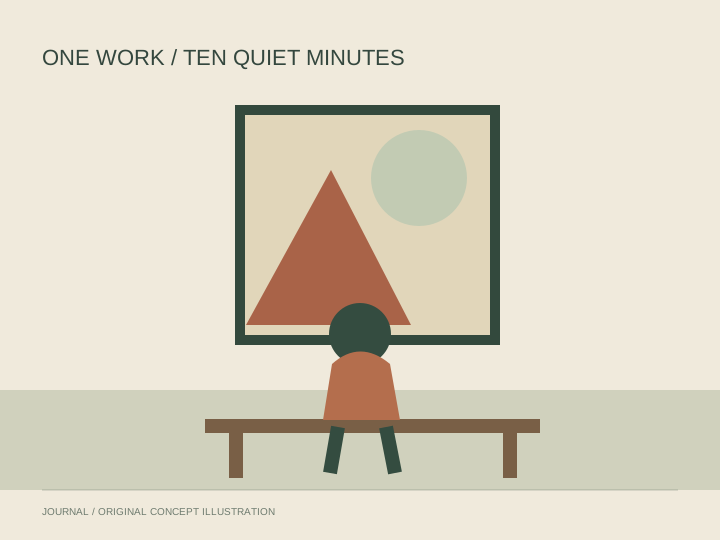
A busy gallery can encourage quick decisions: like it, dislike it, move on. For one work, try delaying that verdict. Ten minutes is enough to separate what you noticed immediately from what appeared after a more deliberate look.
Make an unhurried first pass
Spend the first part of the exercise describing the image in plain language. Note the main shapes, the lightest area and the arrangement of figures or objects. If you cannot identify something, describe its appearance instead of supplying a confident name.
Do this before reading a long interpretation. A museum label can provide valuable context, but it is useful to preserve a record of your initial observation as well.
Turn an impression into a question
Choose one early reaction. If the scene feels crowded, ask what produces that impression. Are forms overlapping? Is the visible space shallow? Are there few areas left empty? Looking for evidence makes the reaction easier to discuss.
Write down one question that remains unanswered. You do not need to invent an explanation for every detail.
Read, then look again
Now read the available label or reliable collection information. Separate documented information from your own interpretation. Return to the work and check whether the added context changes where you look.
Finish with two brief notes: one detail you missed at first and one question worth pursuing. Repeating this exercise with different works can help you recognize your viewing habits, without turning art appreciation into a test with a single correct response.