Texture in Art: What You See and What You Imagine
A painted surface and a depicted surface are different things. Learn to distinguish the marks of a medium from the textures they suggest.
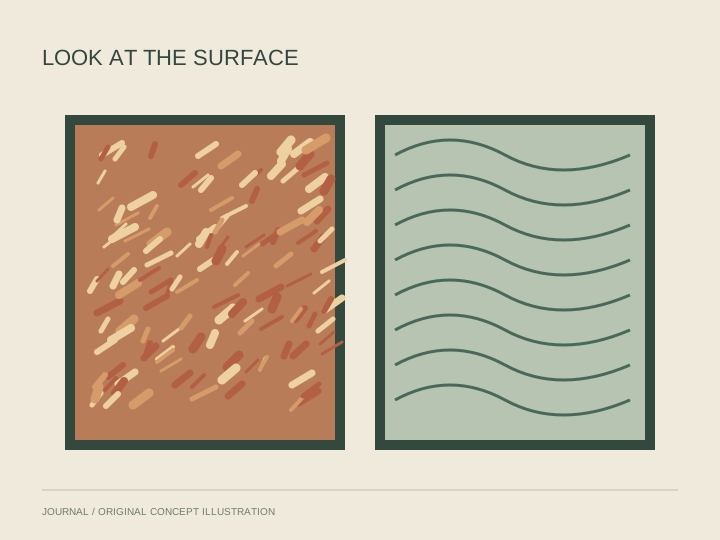
A painting of rough stone can sit on a comparatively smooth surface. A thickly worked passage of paint can depict something delicate. Keeping the material object separate from the depicted subject opens up a useful question: which texture are you actually noticing?
Begin with the visible evidence
Texture concerns the surface quality of an object or the impression of a surface in an image. Look for raised marks, repeated strokes, changes in sheen or fine patterns. At a museum, use your eyes and the permitted viewing distance; looking closely does not require touching the work.
Describe a small area without naming its subject. Words such as uneven, ridged, dotted or smooth may reveal something that a quick label like 'fabric' would overlook.
Ask how the illusion is made
Next, identify what that passage represents. Which marks suggest fur, bark, cloth or metal? A few strokes can sometimes create an impression without describing every individual detail.
Compare two areas in the same work. Does one rely on strong contrasts while the other uses a repeated pattern? Explain the difference using features you can see.
Remember the limits of a reproduction
A digital image can help you examine detail, but screen size and lighting in the photograph affect what is visible. Treat uncertain surface effects as questions to revisit in front of the object.
The useful distinction is simple: a work has a material surface, and it can also represent surfaces. Your description becomes clearer when you say which one you mean.