Make a Small Inventory of a Painted Pattern
Identify a recurring motif, map where it appears and notice where a pattern changes or stops.
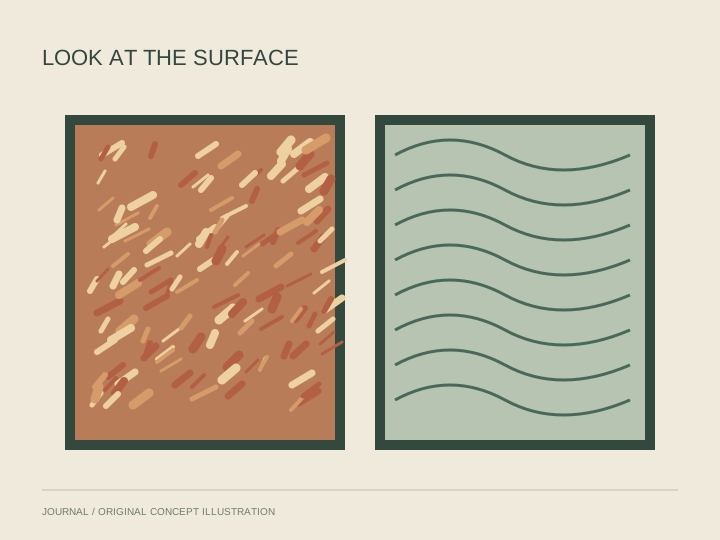
A pattern can be easier to describe once its recurring unit is named. Getty introduces pattern as a design formed by repeated shapes or symbols. Rather than calling an entire picture patterned, try finding the particular motif that makes the repetition visible.
Choose one small unit
Look for a mark, shape or symbol that appears more than once. Draw a rough version on your own paper and give it a neutral name, such as a hooked line or a small oval. Avoid turning the name into a story before you have checked the surrounding details.
The sketch need not imitate the artist's technique. Its purpose is to keep your attention on a specific unit while you look elsewhere in the picture.
Map three appearances
Mark three locations where you think the motif recurs. Compare their orientation, size and spacing. If one example is only partly visible, say so. If the likeness is uncertain, keep that uncertainty in the inventory rather than silently counting it as a match.
This task is about identifying the recurring unit, rather than measuring the rhythm of every interval. A picture can contain several patterns, and each may need a separate little map.
Study an interruption
Find a place where the motif changes, becomes hidden or stops. Describe that interruption before suggesting what it means. A break may attract attention, but the observation alone does not establish an artist's intention.
Finish with a short caption naming the motif, its main location and one variation. This gives a future conversation something concrete to return to instead of a broad claim that the picture is busy or decorative.
The local cover illustration is an original surface study, not a sample taken from an identified painting.