Compare a Measured Shape With an Irregular One
Use geometric and organic as descriptive starting points, then check how the shapes actually relate.

A rectangle and a leaf-like outline invite different descriptions. Getty distinguishes geometric shapes from organic ones in its introductory art vocabulary. That distinction can help you begin looking, provided it remains a description of visible form rather than a shortcut to meaning.
Pick two enclosed areas
Find a shape with a clearly ordered outline and another with a less regular boundary. Record their positions and sketch them separately on your own paper. An approximate sketch is enough; the task does not require measuring the original artwork.
Avoid assuming that an organic shape depicts a living thing or that every geometric shape was made with a ruler. Those are separate claims that need additional evidence.
Examine a shared boundary
If the shapes meet, look closely at the meeting point. Does one stop at the other, overlap it or leave a gap? If they are far apart, compare the areas around them instead. Keep the observation tied to the two chosen shapes rather than expanding into a catalogue of the whole image.
Now ask whether the contrast remains as strong when you look again. A supposedly regular outline may have small deviations; an irregular shape may contain a repeated curve. Those details can make the initial categories more interesting.
Allow a mixed answer
Write a short comparison that includes one resemblance as well as one difference. There is no need to force every outline into a rigid category. The vocabulary is useful when it helps you point to a feature another viewer can inspect.
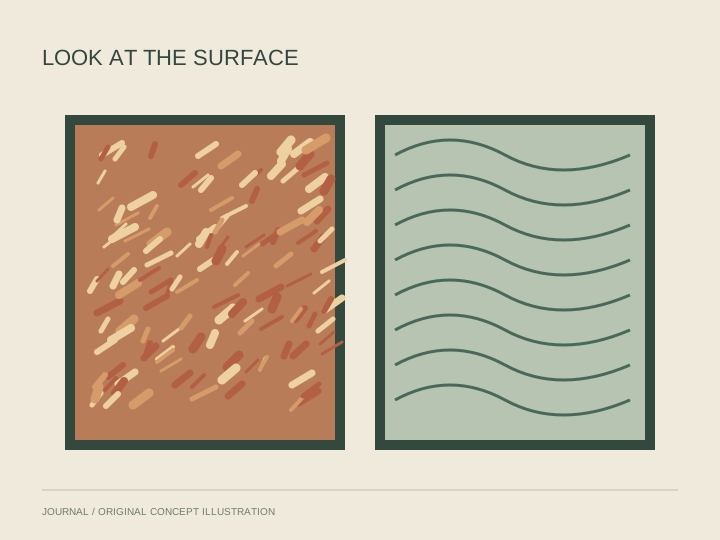
End with a question about how the shapes participate in the composition, leaving symbolic interpretations open. The accompanying original illustration is a shape study, not a photograph or reproduction of a specific artwork.