Look Between the Objects: A Negative-Space Exercise
The spaces around a subject have shapes of their own. Try describing them before naming the things in a painting.

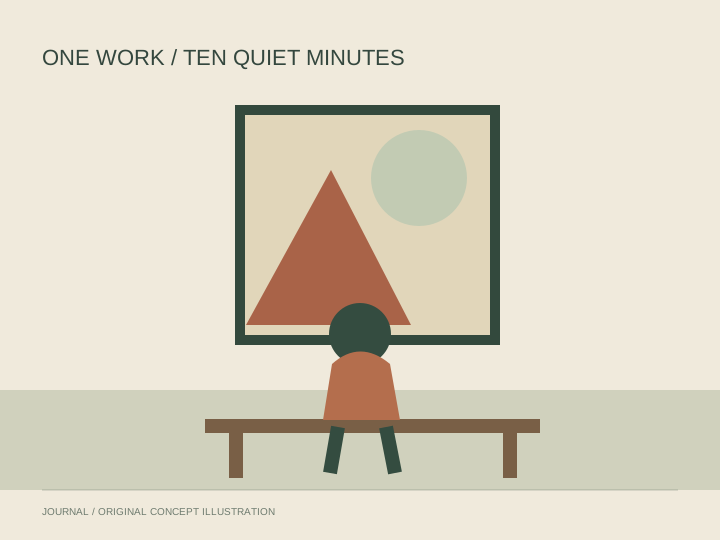
A painting can become familiar so quickly that we stop looking at its arrangement. We recognize a chair, a person or a vase and feel that we have already understood the picture. Looking at the spaces between those objects offers another starting point.
Give the gap a shape
In art vocabulary, negative space refers to the area around the main forms. Choose a painting you can look at comfortably and find one gap between two objects. Describe its outline without naming the objects that border it. It might seem narrow at one end, rounded along an edge or open toward the frame.
There is no need to decide whether that shape was the artist's main intention. This is an observation exercise. Keep a distinction between what you can point to and what you imagine the artist meant.
Trace an imaginary boundary
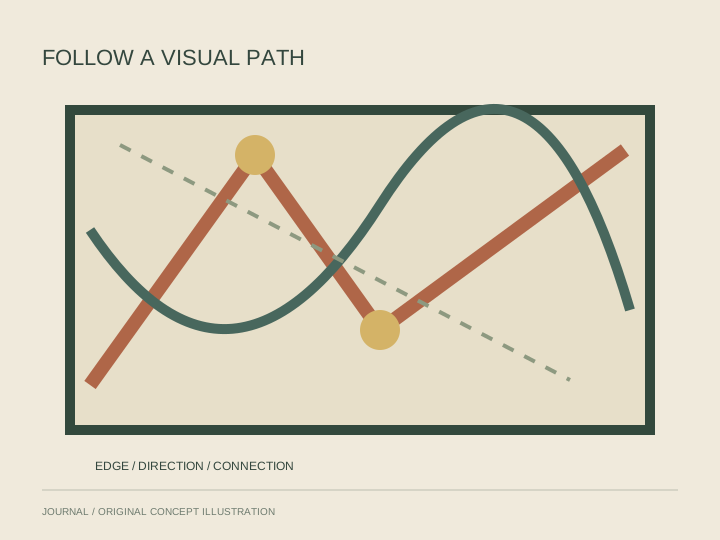
Follow the gap's perimeter with your eyes. Where does it close, and where does it seem to continue? Then look at a second gap elsewhere in the image. Ask whether the two spaces echo each other, interrupt each other or feel unrelated.
If you are making notes, draw only a rough outline. Artistic skill is not the test. The sketch is a reminder of a relationship you noticed, and an imperfect outline may be enough to make you look again more carefully.
Return to the subject
Now name the objects you temporarily set aside. Has the space around a figure made it seem isolated, crowded or firmly placed? Describe your impression as your response, rather than a universal meaning that every viewer must share.
Compare your first sentence about the painting with a new one that includes the surrounding space. The second description may be more precise even if your emotional response has not changed. You have added another part of the picture to your attention.
Try this with a different composition on another day. Do not grade one work as better simply because its gaps are easier to describe. The point is to discover how much of a picture remains available after its recognizable subject has been named.