Visual Texture: What a Reproduction Lets You Say
A convincing painted surface and the physical surface of a painting are different kinds of evidence.
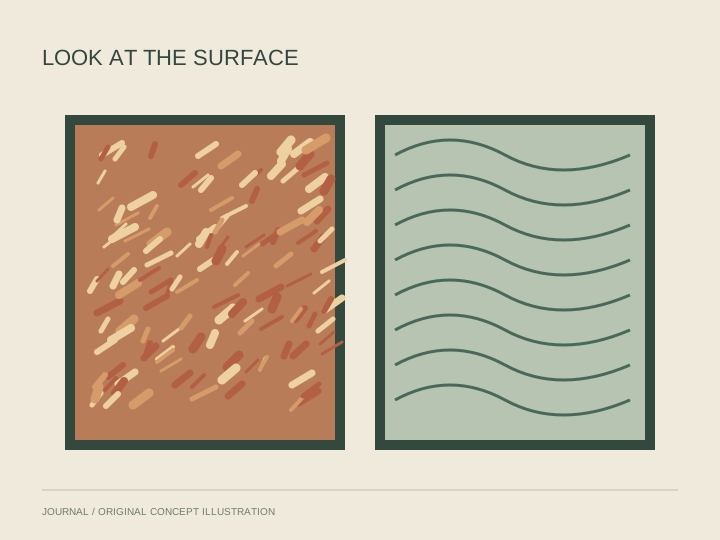
A painted stone can seem rough even when the actual painting cannot be touched. Conversely, a photograph may hide much of the paint surface while showing the depicted object clearly. Looking at texture becomes more precise when those two questions remain separate.
Identify the texture you mean
Texture can describe how a surface looks or feels. Begin by stating whether you are discussing the represented object, the artwork's visible surface or both. A sentence about soft-looking fabric does not necessarily describe the physical paint.
Choose one small passage and note the marks, edges or changes in color that contribute to its appearance. Describe what the image shows before deciding how the original material was applied.
Keep the reproduction's limits visible
Ask whether the photograph contains enough detail to support a claim about brushwork or surface relief. If not, record the limitation. Zooming into an image can enlarge its pixels without revealing additional evidence.
Do not infer a specific tool, paint thickness or conservation condition from an unclear screen detail. A useful note can distinguish a visible impression from a material question that requires a reliable catalogue description or closer examination.
Compare two descriptions
Write one sentence about how the depicted object seems to feel. Write another about the marks you can actually identify in the reproduction. If the second sentence is much more cautious, keep it that way.
Those descriptions can enrich each other without being collapsed into one claim. A smooth-looking object might be represented through conspicuous marks, or a convincing texture might be difficult to explain at the available resolution.
The exercise asks for attentive viewing rather than contact with an artwork. Follow a museum's viewing rules and use published information when a physical detail is important. The cover illustration is an original texture study, not a close-up photograph of a particular painting's surface.