Write an Art Note in Two Columns: Seen and Suggested
Give observation and interpretation their own space so that each can improve the other.
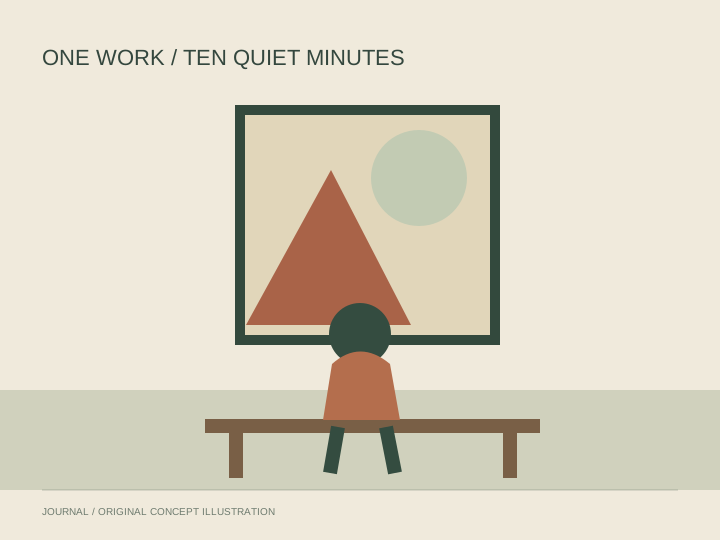
An art note can move from description to interpretation in a single sentence. A figure becomes lonely, a dark patch becomes threatening and a doorway becomes an escape. Those responses may be worth exploring, but they become easier to discuss when the visible evidence remains available beside them.
Give observation its own column
Choose a work and write a few notes under seen. Keep them concrete enough that another viewer could point to the same feature. Record a position, an outline, a contrast or a repeated mark rather than beginning with a mood word.
Formal elements such as line, shape, color and space offer vocabulary for those observations. Use a term only when it helps identify something. An ordinary description is preferable to a technical label whose meaning is uncertain.
Let the response stay provisional
In a second column headed suggested, record the associations or feelings those features prompt. Connect each response to one observation without treating that connection as proof of the artist's intention.
For example, you might explain that a placement contributes to your sense of separation. That is different from claiming to know why the artist placed the figure there. The distinction makes room for both attentive looking and honest uncertainty.
Revisit the pair after reading
After consulting a reliable label or catalogue entry, return to both columns. Has contextual information changed an interpretation? Has it also led you to notice a detail that your first description missed?
Keep a short record of the revision. You do not need to erase an earlier response merely because the account has become richer. The note can show how observation, information and interpretation influence one another over time.
This is a personal looking method rather than a grading system for other viewers. Its value lies in making the path from evidence to response visible, so a conversation can explore differences without pretending that every first impression is a settled fact.